



How to up your CV game? … Tips for cover letter included.



Intro
"To succeed in today's job market, you have to think of your resume as an advertisement targeted to your future boss."
To put this into simpler and more practical words – you are a product (of your predispositions and experiences), and the employer is a potential buyer. You, also being a seller, have the mission to sell the product to the buyer (aka. land a desired job). It may seem a bit harsh, but it will get you thinking in the right way.
CV (curriculum vitae; resume) tells a person what you did, and a cover letter (CL) tells them how and why you did it.
Why are they so important?
These pieces of paper are most likely the first pieces of information someone who does the selection for the job sees about you.
Simple as that.
The idea here is to provide you with some practical advice on how to take your CV and Cover letter game to another level and, ultimately, get you one step closer to landing the desired job.
General, always applicable tips
- Be as precise as you can (and do not lie)
- Be aware of the need for continuous improvement
- Pay attention to graphical output (spark up your CV with some smooth graphics)
Be as precise as you can (and do not lie)
As stated in the intro, the sole purpose of your CV and CL is to present yourself as desirable as possible. So, please, avoid clichés. Research has been done on the undesirability of cliché phrases.
| “I can work independently.” | For a grown-up, that is a basic requirement. |
| „I'm a hard worker.“ | As you should be. Can you think of any company that wants to hire lazy people? |
| „I am a good communicator.“ | Great. We do want people who know how to talk to other human beings. |
So, be as specific as you can.
I had come across situation, and I did action in order to goal.
Also, when stating your skillset, I recommend the Fluent > Proficient > Familiar "framework. " In my case, I am familiar with Python, HTML, CSS and R programming language, psychotherapy basics, proficient with SPSS Amos and fluent with SPSS.
On top of that, lying on your resume indeed is an interesting topic. Don't do it.
The single most important reason – today, there are numerous sources of information, and a trained recruiter will know that something is off. Also, it is pretty obvious when someone is exaggerating. The best thing you can do is take what you got and present it in the best way possible.
Last but not least, take into account that you should only include experiences that are relevant to the position that you are applying for.
Be aware of the need for continuous improvement
The principle of relevance means that you will have to update your CV and CL from time to time. Updating software serves the purpose of adding new features or crushing bugs. The same principle applies to CV and CL.
Think of your CV and CL as projects. All meaningful projects take time, so do these.
Sometimes you will send applications, only to find out a few minutes later that you forgot a nice detail about your former job description.
The content you could update:
- You have learned a new (programming) language
- You moved from “proficient” to “fluent” in some of your skills
- You acquired a new certificate
- You participated in a course, webinar, meet-up, or went on a conference (active or passive participant)
- Changes in your job description (including promotion or job re-design)
- Do update your GitHub page and be involved on Stack Overflow
The point of all this is to show the recruiters your aspirations. Also, that you want to learn new and improve existing skills*. Knowing the basics of a not-so-common language could be an eye-catcher. Just keep in mind the “relevance” principle mentioned above.
Pro-tip: Do not be ashamed if you went through an online psychology/psychotherapy course or have read some neat books. Most of us will be somewhat amused if we share interests with a candidate. If they are relevant – do not hesitate to mention them briefly.
Pay attention to graphical output (spark up your CV with smooth graphics)
This may seem not-so-important, but it is. The human mind operates according to some principles. Even the mind of someone educated in that field works according to the same principles. If I see that you "stole "our logo from the Internet, I most surely will giggle a bit.
One of the first services that will probably come to your mind when thinking about your CV is Europass. And, of course, there is a discussion on whether it is a "do" or a "don't". One downside is that Europass CV has about three possible designs.
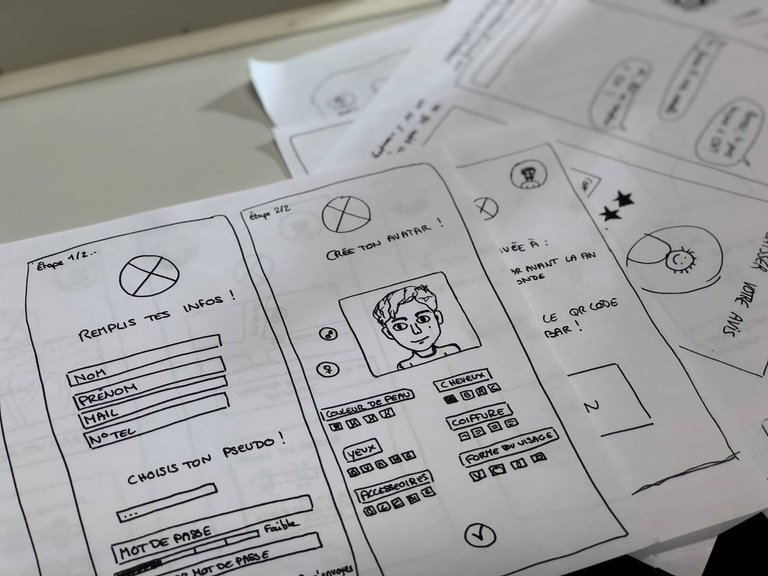
Therefore each one has been seen about a million times (in other words, it is boring and does not stand out). The upside is that, in a way, it standardizes the layout (or the structure) so the recruiter will know where to look to find out what technologies you are acquainted with (speeds up the process in a way that is desirable to you).
So, a general recommendation would be to stick to the Europass structure but add your design as a means to stand out.
On a more specific note:
- „steal“ the logo
- Explore which colors and style the company uses on its website and use them in your CV or CL (again, steal)
- Emphasize what is important
- Make sure the content is not crammed or that there isn't too much blank space
- When you finish polishing up your CV, ask someone to take a look (your perception will get used to the input, and most likely, you will not be able to see if something is off)
(You can do all of this even in MS Word.)
CV suggestions

Curriculum vitae (or CV; résumé) in Latin means "course of life". CV is a document in which you showcase your skills and experiences to a potential employer. The whole point of a CV is to grab readers' attention by providing her/him with concise information about what makes you a desirable/most suitable employee for a particular position. With CL, you will have a chance to explain that in a bit more length.
Basic stuff
The most basic résumé sections are personal information, work experience, education, and skills.
It is advised that the resume should max two pages in length. If you want to add information that you feel is important, it is okay, but don't go over three pages.
Personal information
Name, date of birth, current location, contact
And any important information that you would like to point out (e.g., Looking for a remote opportunity.)
Under contact, it would be preferable to include the phone number, email address, and links to your social media profiles (e.g., LinkedIn).
- Social media allows you to present yourself, your accomplishments, attitudes, what you appreciate, and much more.
- Also, it shows that you are willing to provide the employer with multiple contacts, which might suggest that you are seriously interested in this opportunity.
Work experience
State your experiences in descending order, from present moment to past experiences.
This is where the relevance principle comes into play. Put emphasis only on what is relevant to the position that you’re applying to.
If you work(ed) in a somewhat unknown company, it might be a good idea to include a bullet/sentence that tells the reader its core business.
- E.g. Human Resources Specialist – Kodius
- Feb 2021 – present
- Kodius is a software development agency providing services of development and design.
For every role you filled, describe your main work activities in a few bullets/sentences*
- Analyzing data to improve existing personnel practices and to develop new ones
- Tracking employee attitudes and anticipating changes
- Developing employer brand
- Coordinate hiring activities
If you don’t have much work experience, stating volunteering experience or freelance projects is more than fine. The point is to show what you have learned and to present your work habits.
Bullets or sentences? Whichever works for you. But, as a CV serves the purpose of showcasing your experiences, bullets may be more suitable. Also, they are less visually monotonous than text.
Educational background
Period + institution
Emphasize experiences relevant to the job opening and those you think will be interesting for recruiters to see.
- Built a web app with Elixir and Vue.js
Skills
These can roughly be divided into hard and soft skills.
- For us, an ideal software developer candidate would be someone who knows her/his way around Ruby on Rails, React.js, Vue.js, Elixir, Node.js, and PostgreSQL.
- Also, for a candidate to fit in, it would be good for a person to be: open-minded, flexible, someone who wants to learn and develop, loves challenges, and whose primary motivation is to achieve stuff.
As sections similar to „Organizational skills“ can be somewhat ambiguous, try to be as specific as you can.
- „Handling details“ by itself doesn't mean anything, but adding an example could make a much different impact.
Additional stuff
After you have built a core structure of your CV, you might consider adding some additional information.
- Photo, summary or objective, interests, certificates/courses, conferences/webinars, languages, and additional activities, including volunteering or hobbies.
- Do include your GitHub, Stack Overflow, or whichever is relevant profile. Allow the recruiters to know more about you.
Photo
Including a photo of yourself seems to be a bit of a disagreement point. Some say that it is not necessary. Although, a headshot can be another piece of information that you can use to your advantage.
A suggestion would be to keep it professional and show a human side of you (smile).
Summary
About three sentences in which you describe yourself. What drives you, why you want to work for Kodius, why you would be a good addition to our team.
Interests
What would you ideally work on?
- Developing instruments according to psychometric principles
- Developing employee abilities and skills and planning their career development
- Employer branding activities
- Providing (psychotherapeutic) support for employees
Certificates/courses
Did you invest some time and energy in upgrading your skills? Great. Give them a place to shine.
Conferences/webinars
Did you audit something relevant in this corona-induced-influx of online meet-ups? Also great. Show us that you are someone who loves to do what she/he does.
Languages
Since English is implied by default, state your proficiency.
Any commonly used language is a desirable asset since modern business runs globally.
Have you just started to learn Norwegian? Good. Grab our attention (but be prepared to answer some basic questions).
Additional activities
Did you volunteer in an animal shelter (even for a little while)?
Do you train martial arts in your free time?
- Again, great. It shows you are a human.
- State those in a few bullets towards the end of your resume.
Cover Letter tips
As stated in the beginning of this blog, CL provides answers to the "how" and "why" of your experiences. CL is a piece of text which you use to describe yourself as a desirable employee.
In general
CL should be a one-paged document.
- Some say that a range of 250 to 400 is just enough.
Single block of text could very easily be tedious, and that is the thing you should try to avoid. Structure your text to lead the reader through a journey. - Use up to a max of 4 paragraphs.
Structure (one of the many possible) - Opening – grabbing the reader’s attention, first selling points – providing contact with the organization
- Middle part – your experience (STAR method: Situation, Task/role, Action, Result)
- Closing – your place in the company
- Signing off „Thank you for your consideration and time. I am looking forward to hearing back from you and learning more about my position in insert company's name“
If you're applying to an active opening, go through the job description and write your CL accordingly. Keep a note of what’s important and make sure that you use that as your selling point. - If you are sending an open application, go through available sources of information and use them while writing.
Guideline questions
Writing a good cover letter might be no easy task, so here are some questions that you can ask yourself. These should lead you through the process.

Bonus stuff
LinkedIn

You have the resources, why not use them?
Come up with a good headline.
(Which of these do you like more? "Software developer" or "Software Developer - interested in BackEnd")
Add a background photo and connect it to your Summary section.
You can always try and connect with recruiters. Do send a message before clicking the button. If all goes down with this application, at least you will know about opportunities in the future.
Engage with content the company puts out. It makes your name and face a bit more familiar. Refer to it later in the application or interview.
Applying via email

If you are sending an email, use the text to sell yourself. This could be the first contact with the recruiter and the opportunity to grab their attention from the beginning.
Write about 150 words on who you are, from which source you find out about them, what kind of employment you are looking for, what you think about the organization, and why, as specific as possible, should they hire you.
Conclusion
We went through a bunch of suggestions. From general ones, through those related to CV and ended with those related to Cover Letter. You will come across a bunch of tips and suggestions for these, and none of them are perfectly accurate. As with any advice in life, take this with a grain of salt. I want to guarantee that this is a 100% success, but I can not. All I can say is that it worked for me. 😁
Resources
For more interesting tips & tricks, I advise you to following resources:
- https://zety.com/blog/resume-statistics#software
- https://www.freecodecamp.org/news/writing-a-killer-software-engineering-resume-b11c91ef699d/
- https://www.resumeble.com/career-advice/resume-statistics-2020-from-resumeble
- https://theundercoverrecruiter.com/the-top-resume-mistakes-that-could-cost-you-the-job/
- https://www.indeed.com/career-advice/resumes-cover-letters/whats-the-ideal-cover-letter-length